

Critical Factors That Determine Food Choice and Diet Acceptability
Food choice and diet acceptability are influenced by many simple and everyday factors. One important factor is biological needs such as hunger, appetite, age, and health status. People choose foods based on how hungry they are, their taste preferences, and whether they have health conditions like allergies or diabetes.
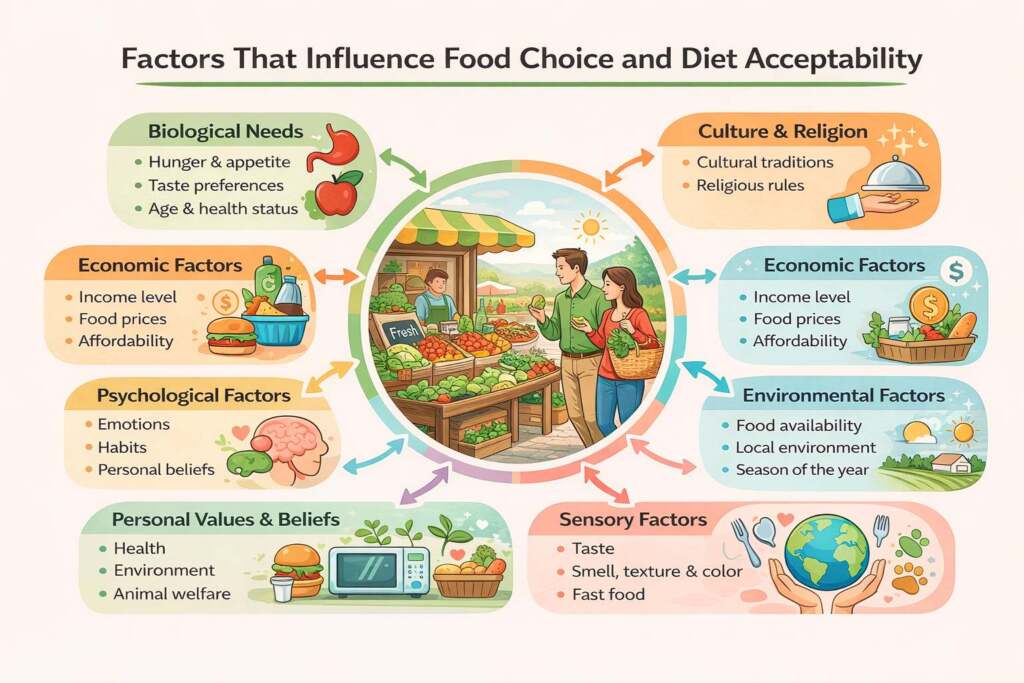
Culture and religion also play a big role in food choice. Many people prefer foods they grew up eating, and religious rules may allow or forbid certain foods. A diet is more acceptable when it fits cultural traditions and religious beliefs.
Economic factors influence what people eat. Income level, food prices, and availability affect food choices. People with limited income may choose cheaper foods even if they are less nutritious.
Psychological factors such as emotions, habits, and personal beliefs affect eating behavior. Stress, happiness, or past experiences with food can influence what and how much a person eats.
The environment also affects food choice. Availability of food in the local area, season of the year, and whether a person lives in a rural or urban area can limit or expand food options.
Sensory factors like taste, smell, color, texture, and appearance are very important for diet acceptability. Even healthy food may be rejected if it does not taste or look good.
Convenience and time matter as well. People often choose foods that are quick and easy to prepare, especially if they are busy or lack cooking skills.
Finally, personal values and beliefs, such as concern for health, environment, or animal welfare, can influence food choices.
In conclusion, food choice and diet acceptability depend on many factors, not just nutrition. A good diet should be healthy, affordable, culturally acceptable, and enjoyable.