

Introduction: Why We Still Believe Food Myths
Common Nutrition Myths and Facts: If you’ve ever been told that carbs make you fat, eating late at night causes weight gain, or fat-free foods are always healthier, you’re not alone. These ideas are everywhere—on social media, in family advice, and even in outdated health recommendations.
This is why understanding common nutrition myths and facts is more important than ever.
Nutrition information spreads fast, but science moves carefully. As someone who has worked with diet plans, community nutrition education, and personal dietary changes, I’ve seen firsthand how believing the wrong advice can lead to frustration, poor health choices, and even nutrient deficiencies.
In this article, we’ll separate nutrition myths from evidence-based facts, using credible research, real-life experiences, and practical explanations you can actually use in your daily life.
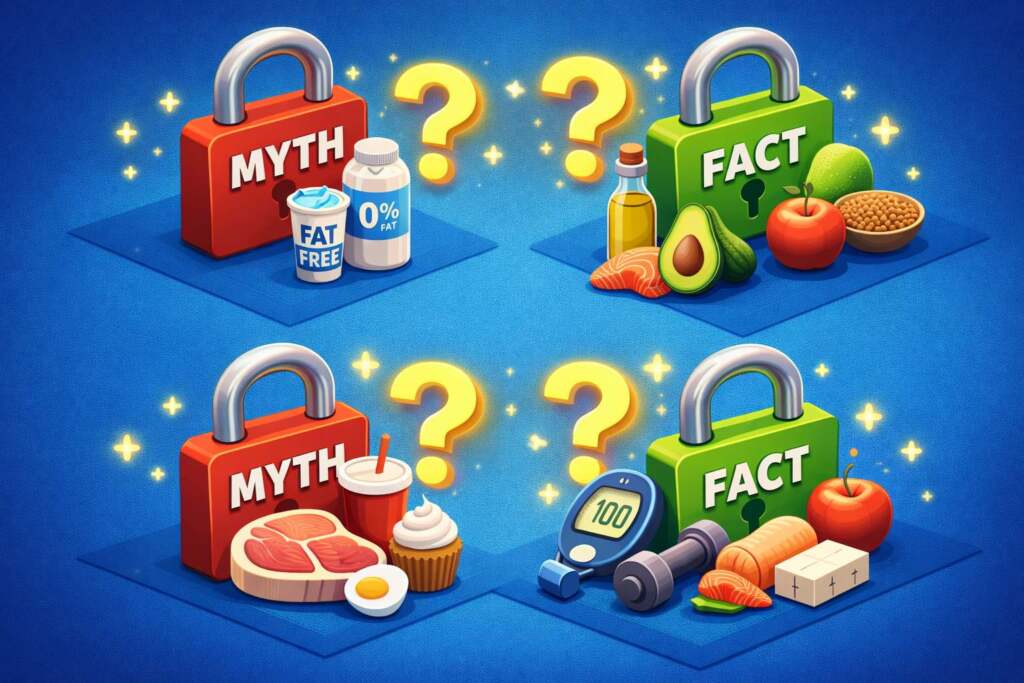
What Science Really Says About Healthy Eating
Common Nutrition Myths and Facts: Why Nutrition Myths Are So Powerful
Before we dive into comparisons, it’s important to understand why nutrition myths stick around.
Key reasons food myths spread easily
- Nutrition science evolves, but old advice lingers
- Headlines oversimplify complex research
- Influencers often lack scientific training
- Diet culture promotes extremes (all or nothing thinking)
According to Harvard T.H. Chan School of Public Health, nutrition misinformation is one of the biggest barriers to healthy eating because it creates confusion rather than clarity.
Common Nutrition Myths and Facts: Side-by-Side Comparison
| Myth | Fact (Science-Based) |
|---|---|
| Carbs cause weight gain | Excess calories cause weight gain, not carbs alone |
| Fat-free foods are healthier | Healthy fats are essential for hormones and brain health |
| Eating late makes you fat | Total daily intake matters more than timing |
| Sugar causes diabetes | Excess sugar increases risk, but diabetes is multi-factorial |
| Protein damages kidneys | Safe for healthy individuals at recommended levels |
1: Carbohydrates Are Bad for You
The Myth
Carbs are often blamed for obesity, diabetes, and low energy. Many people completely avoid bread, rice, and fruits.
The Fact
Carbohydrates are the body’s primary energy source. According to the World Health Organization (WHO), complex carbohydrates such as whole grains, legumes, fruits, and vegetables are essential for gut health and sustained energy.
What matters is the type of carb:
- Healthy carbs: oats, brown rice, fruits, vegetables
- Less healthy carbs: refined sugar, white bread, pastries
💡 Personal insight: When I shifted from refined carbs to whole grains instead of cutting carbs entirely, energy levels improved dramatically without weight gain.
2: Fat-Free Foods Are Always Healthier
The Myth
Many people believe removing fat automatically makes food better for weight loss.
The Fact
Healthy fats are crucial. Research published by Mayo Clinic shows that fats help absorb fat-soluble vitamins (A, D, E, K) and support brain and hormone function.
Healthy fat sources include:
- Olive oil
- Avocados
- Nuts and seeds
- Fatty fish
⚠️ Fat-free products often contain added sugar or starch to improve taste.
3: Eating at Night Causes Weight Gain
The Myth
Eating after 7 or 8 PM automatically leads to fat storage.
The Fact
According to studies referenced by Johns Hopkins Medicine, weight gain is influenced by total daily calories, not the clock.
📌 What actually matters:
- Portion size
- Food quality
- Overall lifestyle (sleep, stress, activity)
👉 Late-night mindless snacking is the real issue—not dinner timing.
4: Sugar Directly Causes Diabetes
The Myth
Eating sugar alone causes diabetes.
The Fact
Type 2 diabetes develops due to a combination of:
- Genetics
- Physical inactivity
- Excess body weight
- Long-term high-calorie intake
The American Diabetes Association explains that sugar increases risk indirectly by contributing to excess calories and weight gain—but it’s not the sole cause.
✅ Moderation, balance, and physical activity are key.